

In this article
- Water damaged documents: what to do right now
- Florence, 4 November 1966
- What went wrong in the first weeks
- Peter Waters and the restoration system
- What the profession learned
- Step by step: what conservators recommend today
- 1. Make it safe
- 2. Watch the clock
- 3. Sort by how wet things are
- 4. Deal with mud
- 5. Freeze what you can't dry quickly
- 6. Air-dry small amounts gently
- 7. Books need extra care
- 8. Expect marks once it's dry
- After it's dry: making the scan readable again
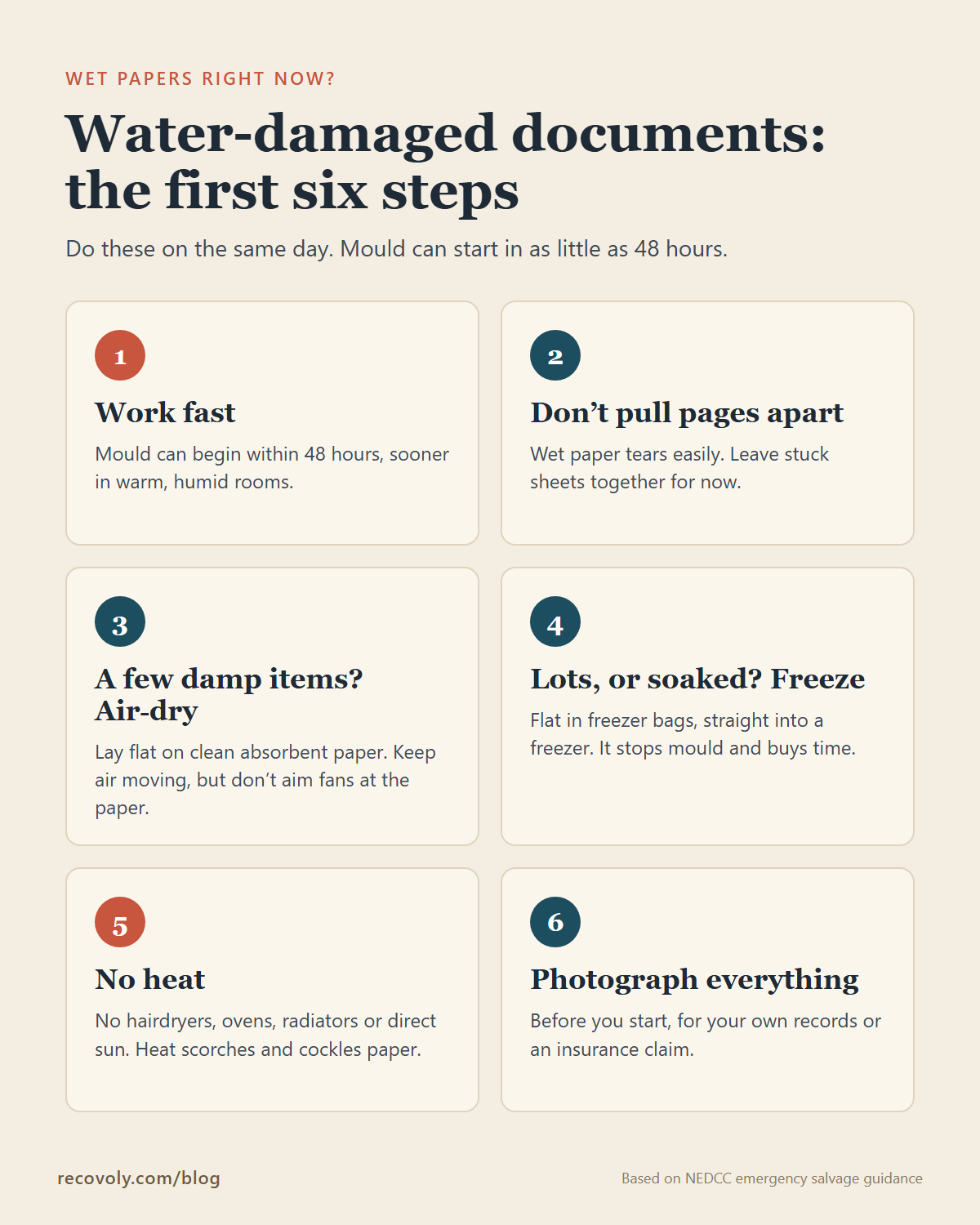
If your water damaged documents are still wet, start here. The full story of why these steps work comes after.
Water damaged documents: what to do right now
Work fast. Mould can start to grow in as little as 48 hours if conditions aren't controlled (NEDCC).
Don't pull wet pages apart. Wet paper tears easily. Leave stuck sheets together for now.
A few damp items? Air-dry them flat on clean absorbent paper, with fans moving the air but not blowing directly on the paper.
Too many, or soaking wet? Freeze them. Put them flat in freezer bags and into a freezer. That stops mould and buys you time.
No heat. No hairdryers, ovens, radiators or direct sun.
Photograph everything before you start, for your own records or an insurance claim.
Now for where these rules came from.
Florence, 4 November 1966
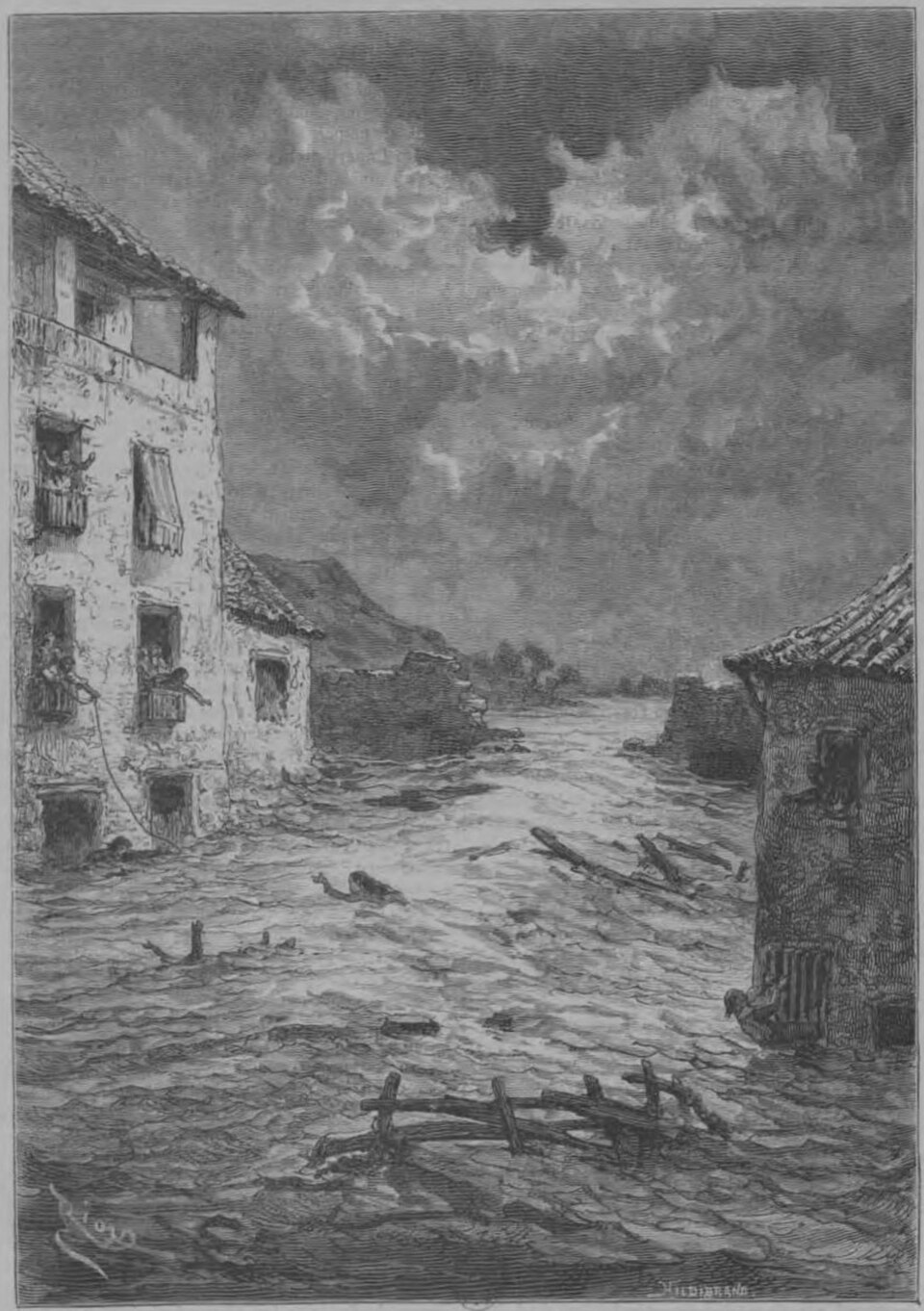
After days of heavy rain, the River Arno burst its banks and poured into Florence. The flood killed 35 people. Around 600,000 tons of mud, rubble and sewage swept through the city, damaging an estimated 3 to 4 million books and manuscripts and 14,000 works of art (Wikipedia, 1966 flood of the Arno).
The National Central Library (Biblioteca Nazionale Centrale), built right beside the river, was among the worst hit. More than a million of its volumes needed urgent treatment (RBM review of Flood in Florence, 1966). At the Gabinetto Vieusseux library, every one of its 250,000 volumes was damaged, and the director arrived to find books buried in mud with pages stuck to the ceiling where the water had peaked (Indiana University Craig Preservation Lab).
Volunteers poured in from across Italy and the world. Florentines called them the angeli del fango, the "Mud Angels". They formed human chains to pass books out of flooded basements (University of Michigan Library).
Flooded street in Florence during the November 1966 Arno flood
What went wrong in the first weeks
The rescue was heroic, but nobody had planned for a disaster on this scale, and some early decisions made things worse.
Muddy, waterlogged books from the National Library were shovelled into trucks and taken to tobacco kilns to dry (Wikipedia, Peter Waters). Others went to brick furnaces and textile mills. The heat dried them, but it also scorched and cockled the pages (Indiana University Craig Preservation Lab).
That is the origin of rule five above. Fast, hot drying feels like progress. For paper, it usually causes new damage.
Peter Waters and the restoration system
In late November 1966, the British book conservator Peter Waters was asked to help. With support from the US Council on Library Resources and Imperial College London, he organised the recovery at the National Library (Wikipedia, Peter Waters; Indiana University Craig Preservation Lab).
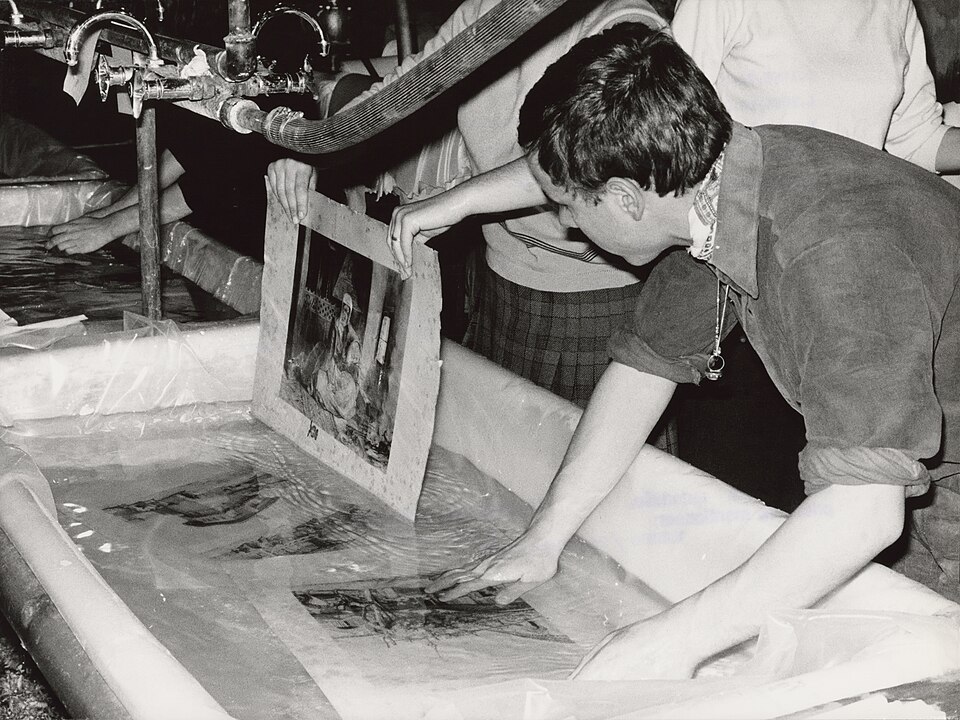
His team built what became known as the Restoration System: a step-by-step process of washing, drying, mending and rebinding that could handle tens of thousands of books (University of Michigan Library event). Dried, brittle text blocks from the first salvage were washed, dried and pressed so they could be used while they waited for rebinding (RBM review). Books were photographed and their treatment written down, and they were dried in purpose-built drying cabinets rather than kilns (Indiana University Craig Preservation Lab).
Water-damaged books being dried after florence flood.
What the profession learned
The University of Michigan Library sums up the two most important results of the Florence flood as the professional training of library conservators and the creation of disaster preparedness and response programmes (University of Michigan Library event). For the first time, conservators from many countries worked side by side and shared methods openly (University of Michigan Library).
Specific techniques spread from Florence too, including freeze-drying wet books, treating collections in phases, and keeping detailed treatment records (Indiana University Craig Preservation Lab).
Waters himself went on to become Conservation Officer at the Library of Congress from 1971 to 1995. He wrote Procedures for Salvage of Water-Damaged Library Materials, first published in 1975, and in 1973 he helped the US National Archives use a vacuum chamber to dry military records soaked in the St. Louis records fire (National Archives, Prologue blog). The habits we now take for granted, freezing first and drying gently, trace straight back to the mud of Florence.
Step by step: what conservators recommend today
These steps follow current guidance from the Northeast Document Conservation Center (NEDCC), the US National Library of Medicine and the Library of Congress. For anything valuable, call a conservator as early as you can.
1. Make it safe
Floodwater can be contaminated and mould can affect your health. Wear gloves, ideally nitrile, and a mask, and work in a ventilated room. Never handle wet materials near electrical hazards.
2. Watch the clock
NEDCC warns that mould can begin to develop in as little as 48 hours if the environment isn't brought under control (NEDCC). The National Library of Medicine notes the risk is higher above about 70°F (21°C) or 70% relative humidity (NLM). In a warm, humid climate like ours in Sri Lanka, assume you have less time, not more.
3. Sort by how wet things are
Separate items that are only damp from those that are soaked. Pay special attention to:
Glossy or coated paper (magazines, some certificates, photo albums). It can fuse into a solid block as it dries, so dry it immediately or freeze it (NEDCC).
Documents with running or blurred ink. NEDCC advises freezing these rather than air-drying them (NEDCC, leaflet PDF).
4. Deal with mud
If the water was muddy, salty or rusty, NEDCC recommends rinsing wet items before freezing (NEDCC). Support the paper while you do it and never rub. If an item is fragile or valuable, leave the rinsing to a professional.
5. Freeze what you can't dry quickly
Freezing doesn't dry anything, but it stops mould and stops the damage getting worse. Drain off excess water, put papers flat in freezer bags, and don't try to separate wet sheets first (Maryland Historical Trust, from the Emergency Response and Salvage Wheel). The Library of Congress describes freezing followed by vacuum freeze-drying as one of the most effective ways to dry large numbers of books and papers (Library of Congress, via National Archives).
6. Air-dry small amounts gently
Air-drying suits small numbers of damp or slightly wet items. NEDCC puts the practical limit at fewer than about 100 books or documents; beyond that, or if items are very wet, professional freezing or drying usually gives a better result (NEDCC).
Lay loose papers flat, singly or in small piles no thicker than about a quarter of an inch (6 mm) (Maryland Historical Trust).
Put absorbent paper underneath and change it as it gets wet.
Use fans to keep air moving, but don't aim them straight at the documents (University of Texas iSchool).
Keep away from direct heat and sunlight. Florence's tobacco kilns are the warning.
7. Books need extra care
Damp books can stand on their top or bottom edge with the covers slightly open so air reaches the pages. Very wet books can lie flat with absorbent paper between some pages. The National Library of Medicine suggests turning drying books every 8 to 12 hours so they dry evenly (NLM).
8. Expect marks once it's dry
Drying is not the last step, as the Library of Congress points out (Library of Congress, via National Archives). Even after careful drying, paper usually stays cockled, with tide lines and stains where the water stopped. That is normal. Rehouse dry items in clean folders and scan them.
After it's dry: making the scan readable again
This is where Recovoly comes in. Once a document is dry and stable, you can scan it and restore the digital copy without touching the original again.
Clean Damaged Pages lifts tide lines, water stains and mould spots while keeping the ink at full strength. Restore Lost Background evens out paper that dried blotchy or discoloured, and Fix Faded Text brings back ink that washed pale. Signatures, seals and handwriting outside the repaired areas are left as scanned, and your original file is never altered.
To be clear about the limits: Recovoly won't stop mould, flatten cockled paper or repair a document physically. That is conservation work. What it does is give you a clean, readable copy to share, print or archive, so the fragile original can be handled as little as possible. For a real example, see our water-stained certificate case study, and for how a whole archive was saved from a flood, read our Iraqi Jewish Archive case study.
If you have a dried, water-stained page, you can try it free.
Frequently asked questions
Can I use a hairdryer to dry wet documents?
Should I freeze wet documents?
How long do I have before mould grows?
Can water stains be removed from paper?
What about wet photographs?
Related restoration tools

Written by
Thisara Jaso
Document Specialist
A document restoration specialist and historical document researcher passionate about preserving, restoring, and uncovering the stories behind historical manuscripts and archival records.


